06 — Portfolio
January — July
Portfolio — Craft, Surface & Circularity
Craft, surface
& circularity
This project was developed within a craft-led design environment in Jaipur, where traditional textile techniques became a site for material investigation, sustainability thinking, and system-based experimentation.
This work approaches craft as a material knowledge system. Traditional techniques are treated as living processes shaped by time, environment, and human intervention rather than fixed outcomes.
Click anywhere to printTap to printScroll to begin
01 — Block print × hand embroidery
Exploration
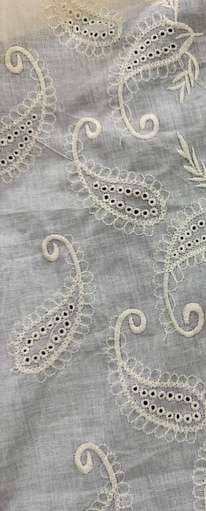
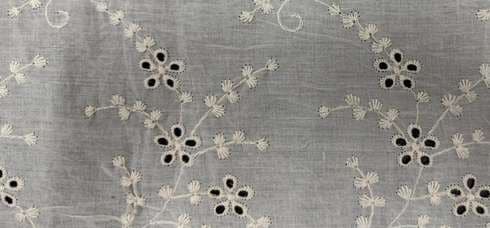
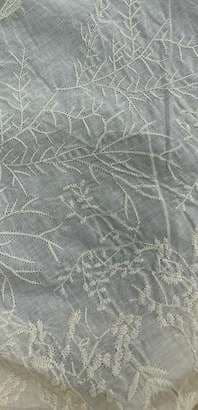
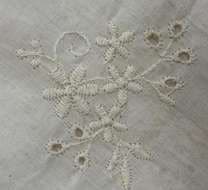
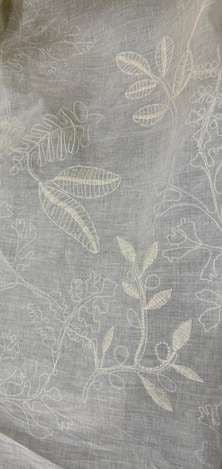
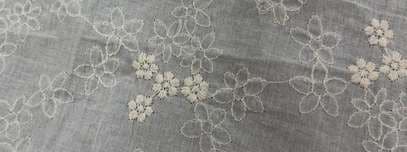
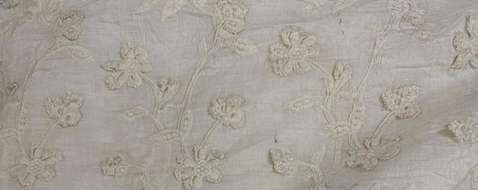
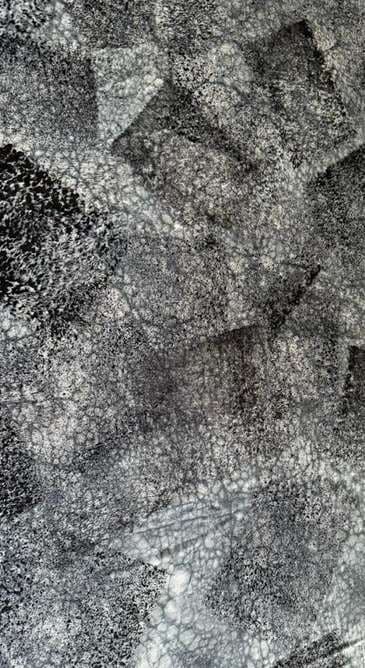
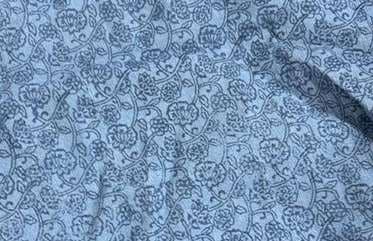
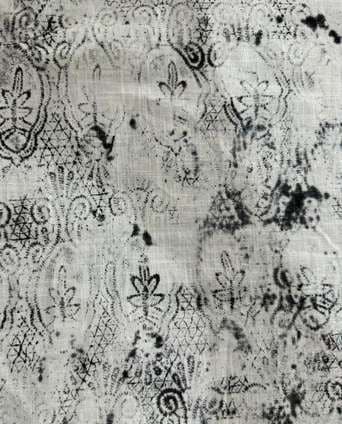
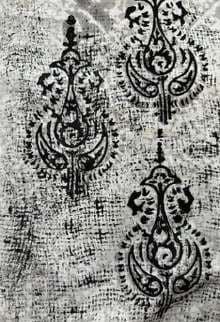
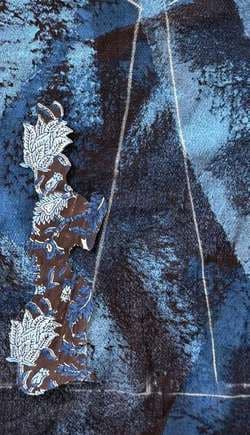
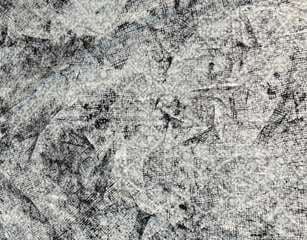
I explored the interaction between block printing and hand embroidery as a layered surface system, observing how these processes coexist and respond to each other. This approach revealed how structural and visual qualities of the textile shift through material layering and human intervention.
02 — Circular Design Challenge · material development
Surface
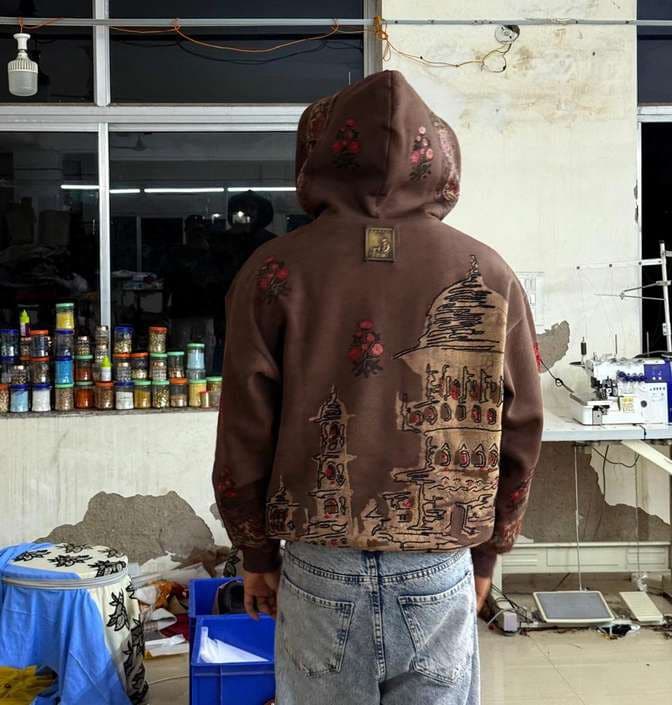
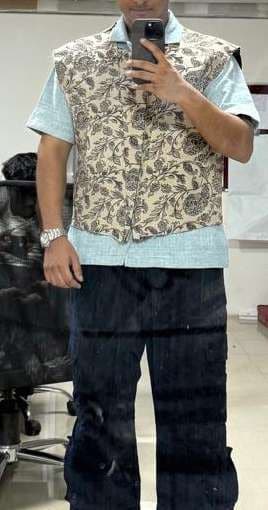
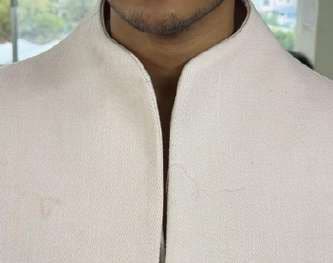
These were the initial patterns and designs for the CDC garments, featuring various dyeing techniques, including Bagru dyeing, along with adda work and sequins.
This corset was constructed by me and features zari embroidery of bird motifs and stems.
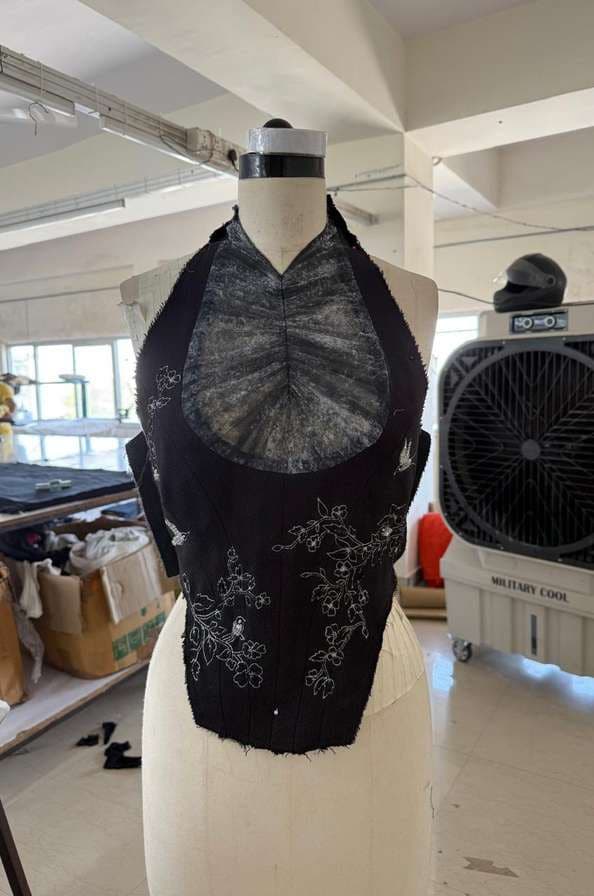
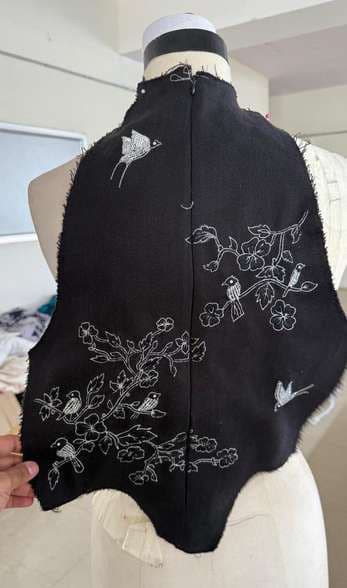
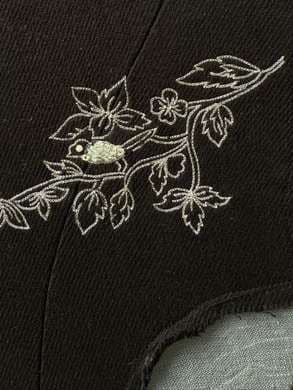
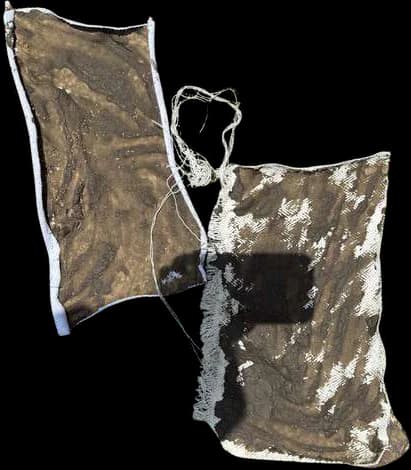
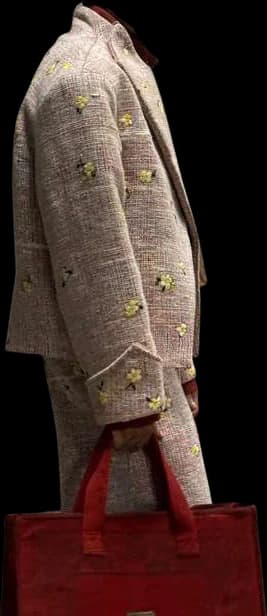
One material was developed through a waste-led material exploration, where discarded fabric remnants were stripped and re-woven to create a new textile structure. This process transformed textile waste into a functional surface from which the silhouette emerged, with embroidery and sequins added as responsive secondary layers.
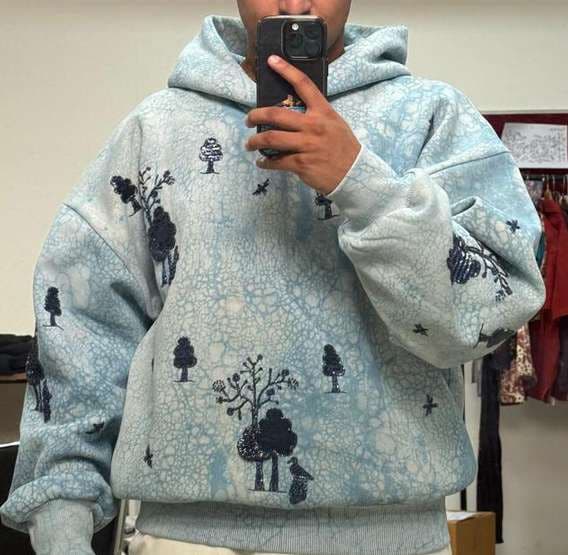
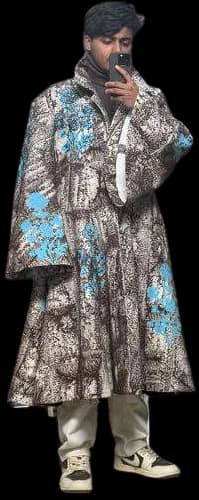
Another material, and the hoodie, explore earth-based surface treatments using a mud and clay mixture applied to dyed fabric and sun-dried. The process generated an irregular, tactile texture, demonstrating how natural materials and environmental exposure can alter textile behaviour and introduce material depth without synthetic finishes.
Block print exploration
The fabric underwent sequential surface treatments, beginning with block printing and followed by spray application, allowing me to observe pigment absorption, diffusion, and surface depth across the textile.
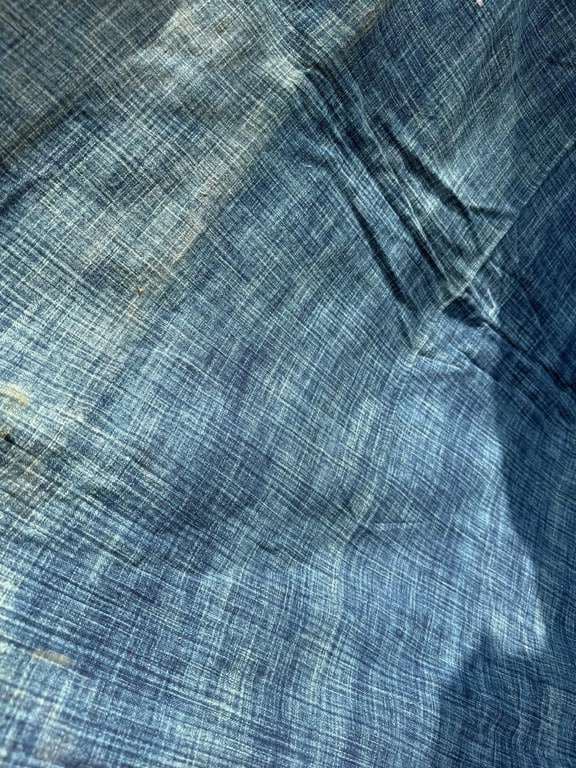
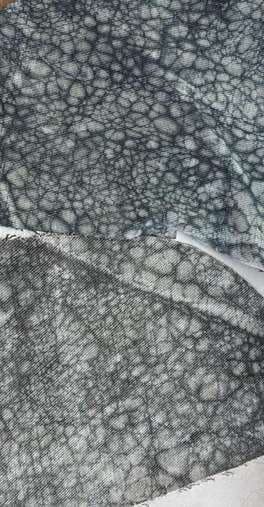
Mix of Bagru dye and bleach
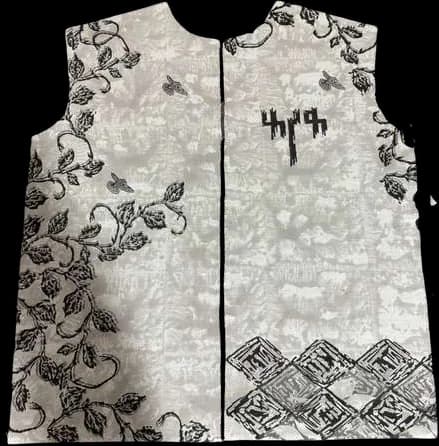
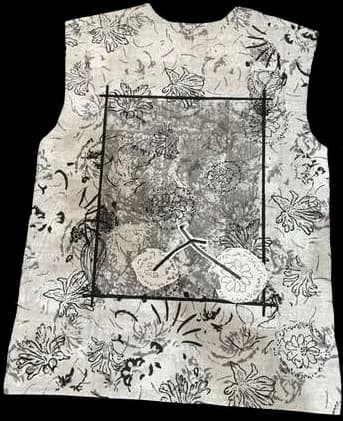
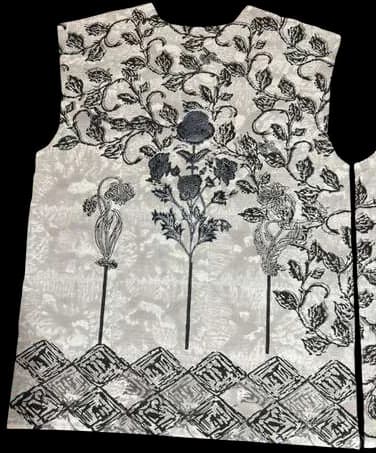
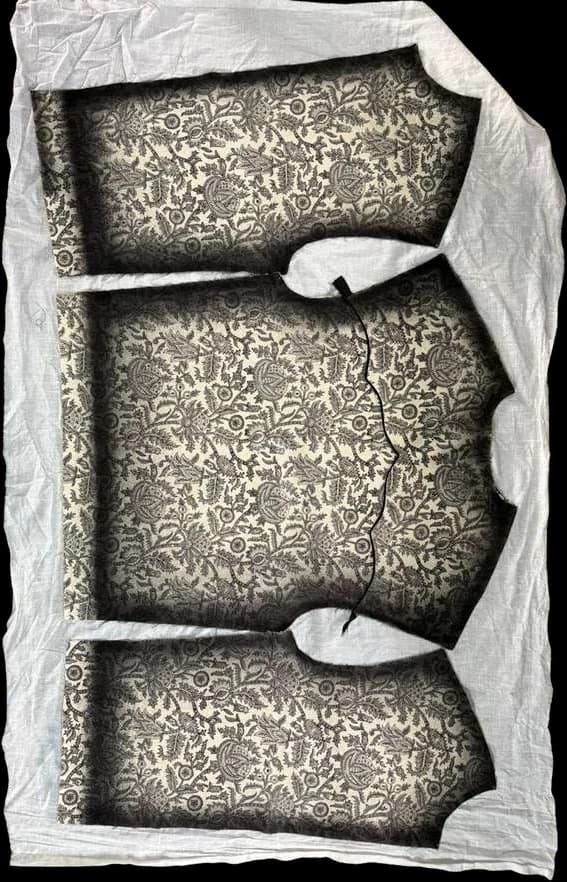
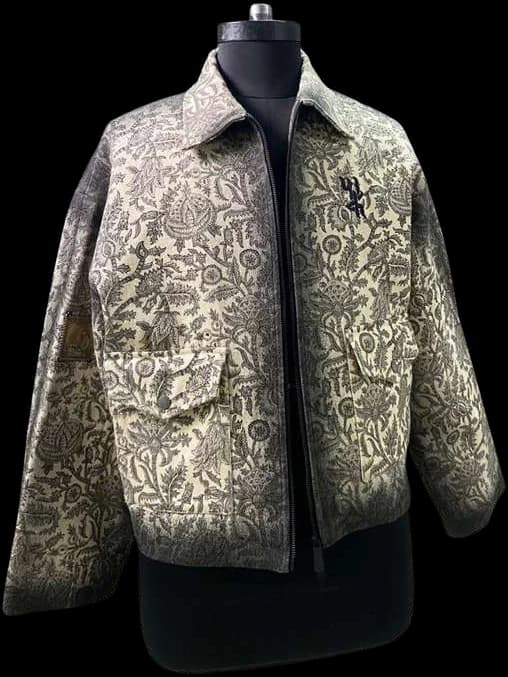
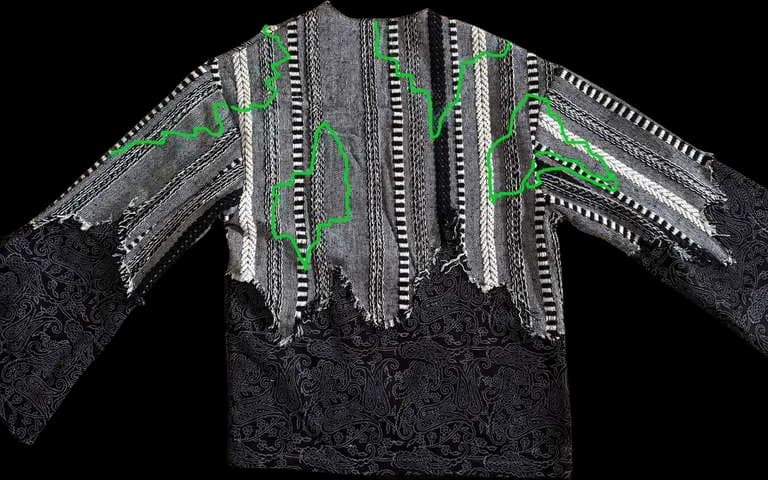
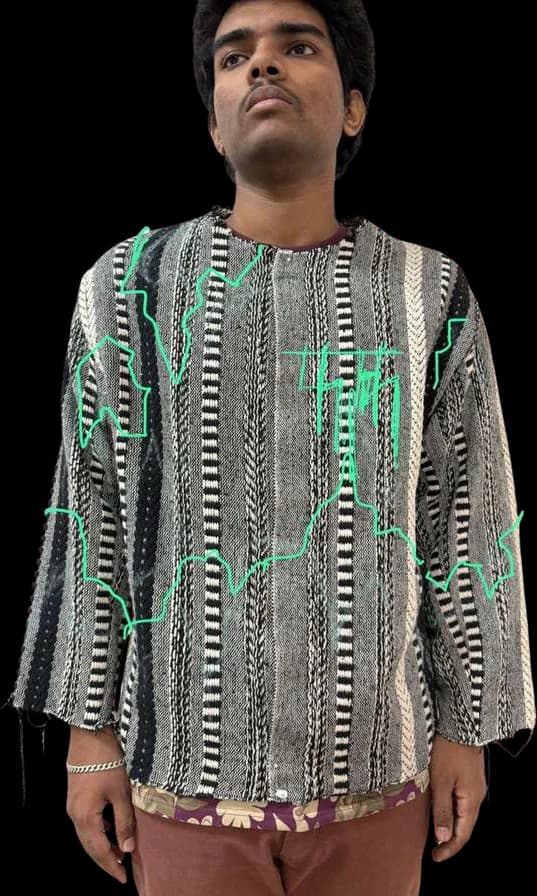
This experiment focused on understanding material transitions, testing how two distinct fabrics could be integrated into a cohesive surface through controlled construction and finishing techniques.
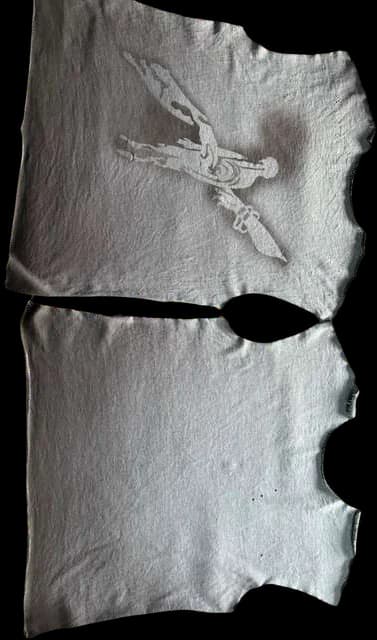
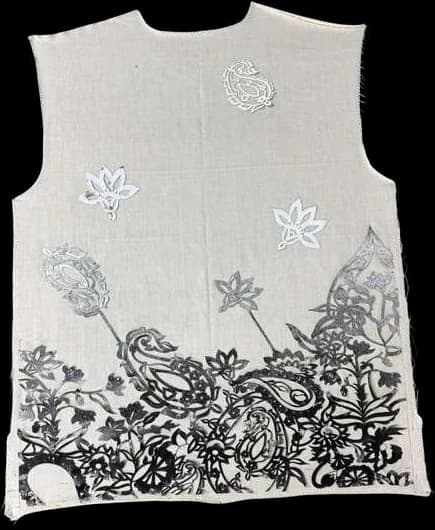
Through layered dyeing, stonewashing, and stencil-based spray application, I investigated how repeated interventions transform textile surfaces over time, mimicking processes of wear, erosion, and material ageing.
Unexpected outcome
“Uneven absorption created irreversible surface changes.”
03 — Folklore · Spring Summer ’25 · CDC
Working within multi-actor material systems
- Folklore
- Spring Summer ’25
- Circular Design Challenge
Pull a thread — the system moves with it
Folklore
During this project, I was involved in the design and construction of multiple textile outcomes while closely engaging with the organisation and sequencing of making processes. My role focused on coordinating construction workflows, contributing to selected design developments, and ensuring material and process consistency across different stages of production.
By working from initial concept through to execution, I gained insight into how individual making decisions, such as construction methods, surface treatments, and material choices, interact within a larger system. This experience strengthened my understanding of design as a collective, process-driven framework rather than a series of isolated objects.
Spring Summer ’25
In this project, I designed and constructed a complete material outcome while also engaging with the construction processes of additional pieces. The work involved sourcing appropriate materials and managing technical processes such as embroidery, surface manipulation, and dyeing.
Through close involvement with these stages, I examined how surface interventions and material treatments influence textile behaviour and visual coherence. Coordinating these processes across multiple pieces allowed me to understand consistency not as a stylistic choice, but as the result of controlled material systems and process-driven decision making.
CDCCircular Design Challenge
This project was developed within the Circular Design Challenge, where material efficiency, lifecycle awareness, and responsible sourcing informed every design decision. My involvement focused on constructing material outcomes and engaging with embroidery, surface manipulation, and dyeing processes, alongside assisting in raw material sourcing and construction workflows.
Working within these constraints shifted my understanding of consistency from a visual outcome to a result of controlled material systems and process sequencing. The project reinforced my interest in circular and biodesign principles, highlighting how regenerative thinking and material intelligence can guide design beyond conventional fashion frameworks.
Constraints encountered
- Material availability limited surface consistency
- Process time conflicted with production timelines
- Circular goals challenged aesthetic control
04 — Live industry project · Liva × Pearl Academy, Jaipur
Material-led exploration of Rajasthani textile systems
From craft technique to material system
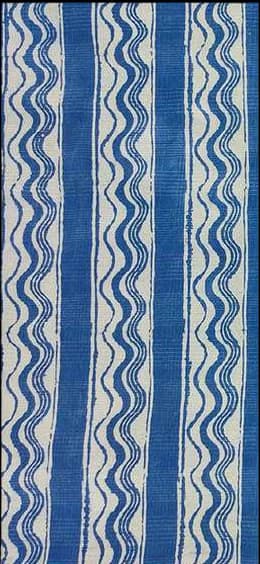
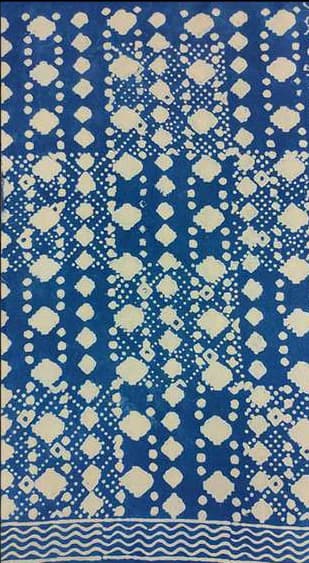
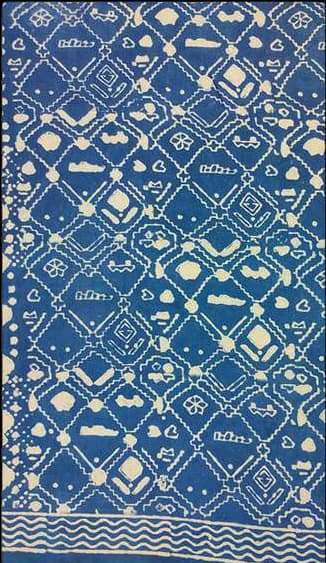
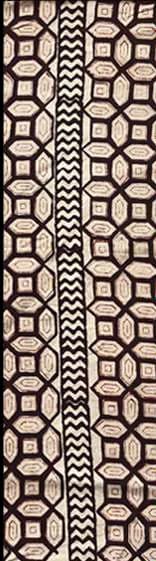
This project investigates traditional textile practices from Jaipur as material systems rather than fashion outputs. Through Bagru, Dabu, and Dabka techniques, the work explores how natural dyes, earth-based resists, and hand processes respond to environment, time, and human intervention.
This project was developed as a craft-based exploration in Jaipur, where the brief required working with traditional textile techniques such as Bagru printing, Dabu resist, and Dabka embroidery, and translating them into a contemporary outcome. While the initial expectation was to create finished garments, the process gradually shifted my focus toward understanding how materials behave through time, environment, and human intervention.
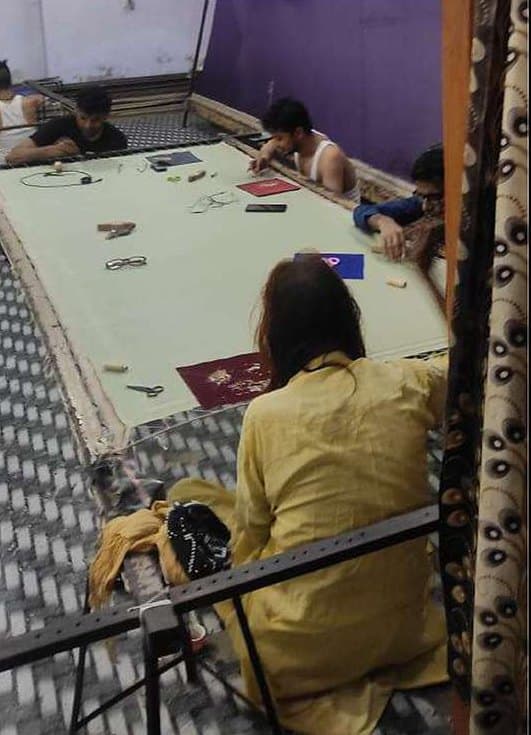
Working with natural dyes and earth-based resists presented several challenges. Colour outcomes were unpredictable due to changes in sunlight, water quality, drying time, and fabric preparation. Issues such as bleeding lines, cracking resists, limited colour ranges, and long process durations required constant adjustment. Collaborating with artisans highlighted how much of the process depends on embodied knowledge and experience rather than fixed instructions. Dabka embroidery further revealed how labour, time, and human energy become embedded within material surfaces.
These challenges reshaped my approach to design. Instead of controlling outcomes, I learned to respond to material behaviour and limitations, using garments as testing grounds rather than final goals. This experience strengthened my interest in material systems, ecological processes, and biodesign-led thinking.
04.1 — Plant-based dye system
Bagru
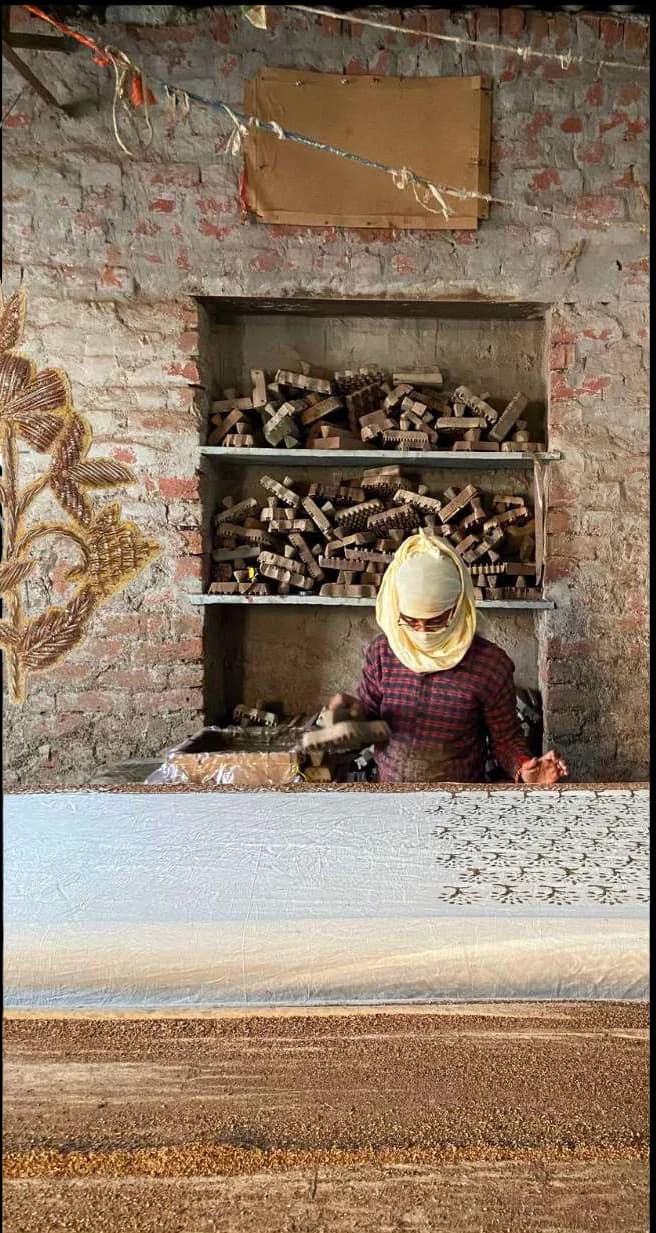
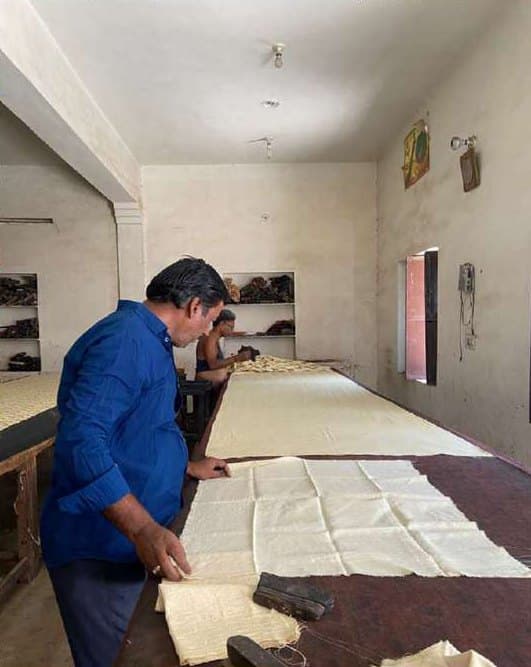
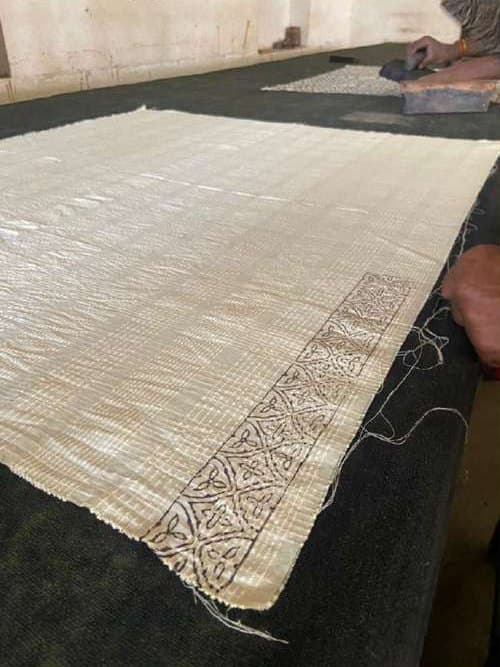
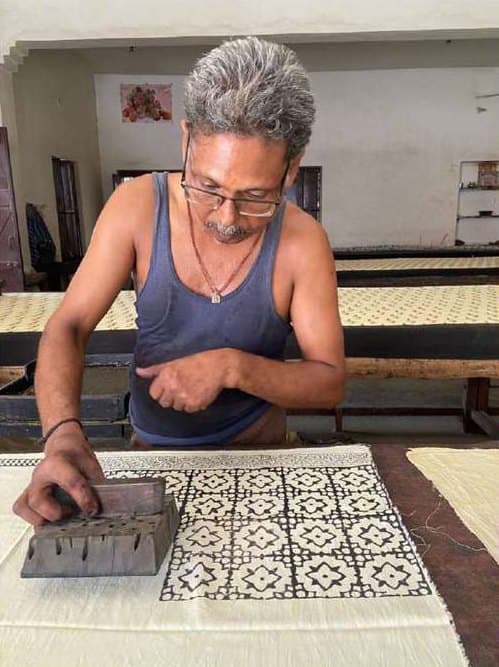
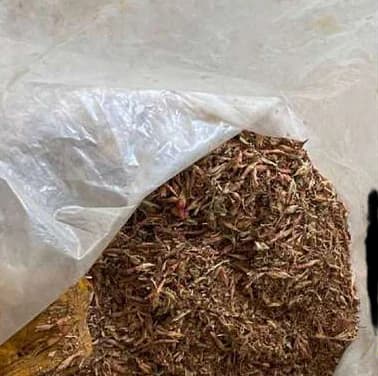
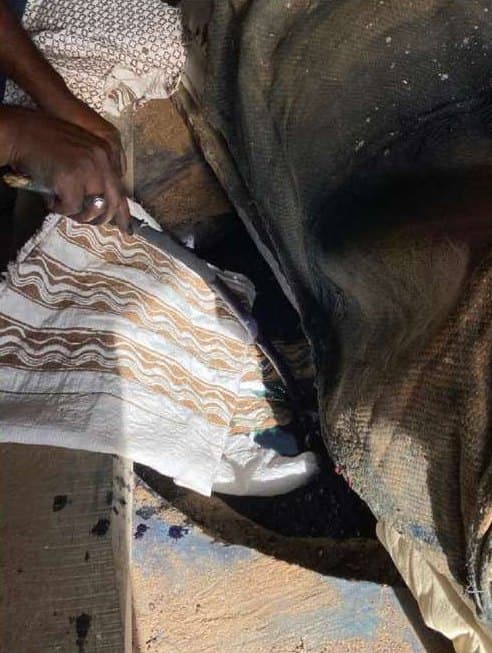
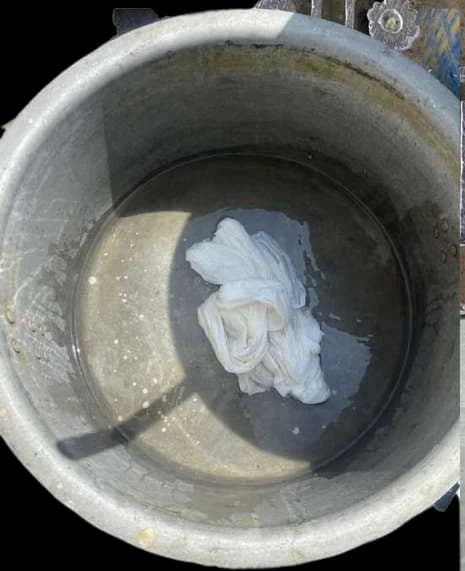
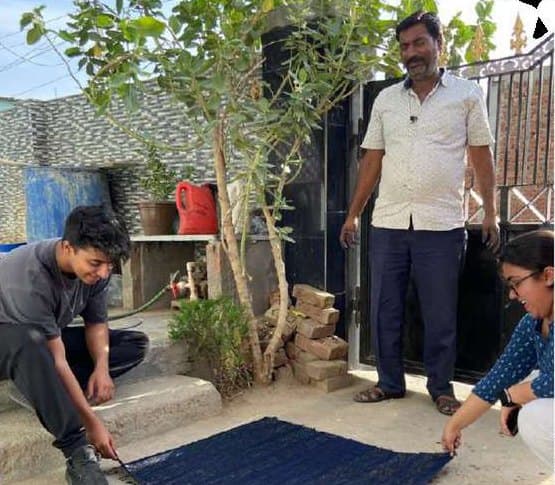
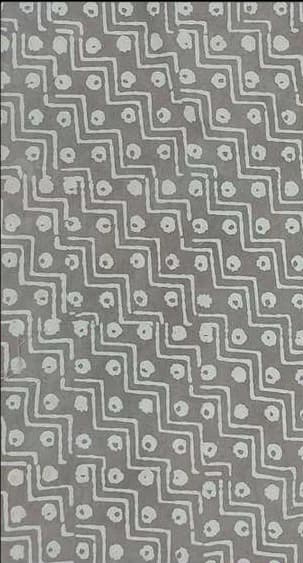
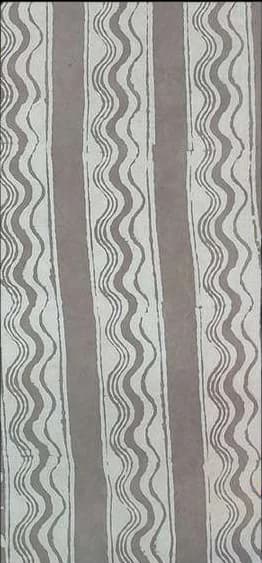
Bagru printing was explored as a plant-based dye system where fabric preparation, mordanting, and sun-drying played a key role in colour development. I was directly involved in preparing the fabric, mixing natural dyes, and observing how variations in temperature, water, and drying time affected the final surface. Rather than aiming for uniform results, I learned to respond to the natural inconsistencies that emerged through the process.
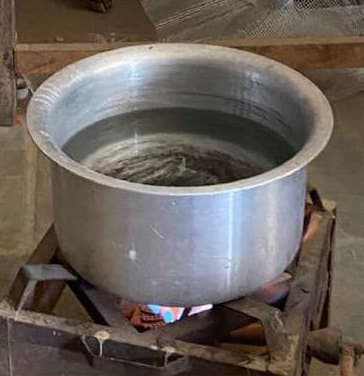
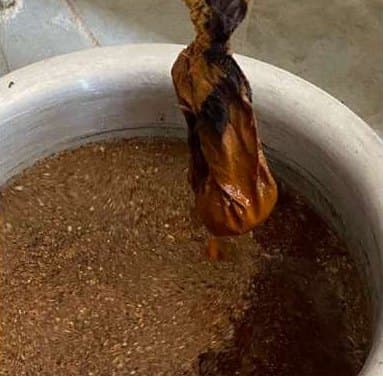
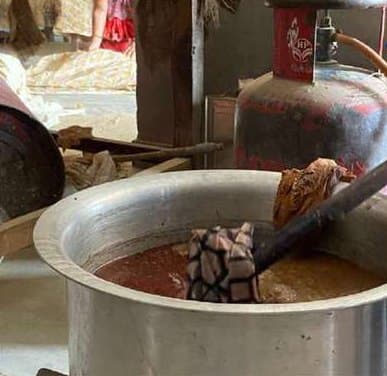
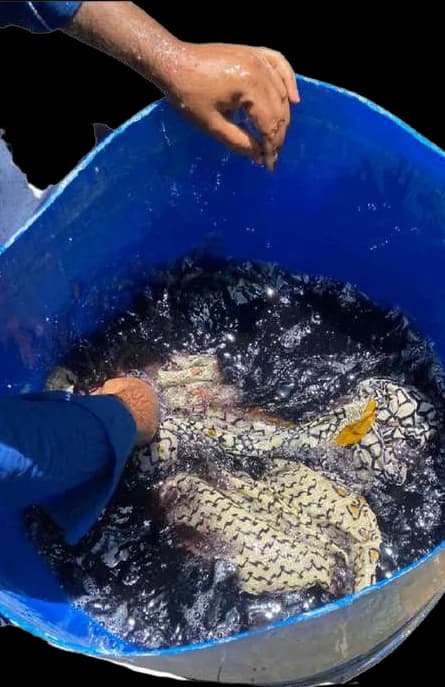
“Colour outcomes could not be standardised.”
04.2 — Earth-based resist
Dabu
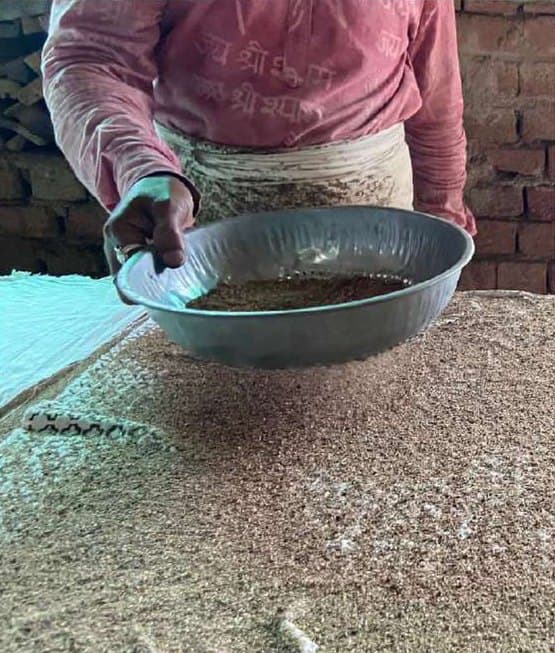
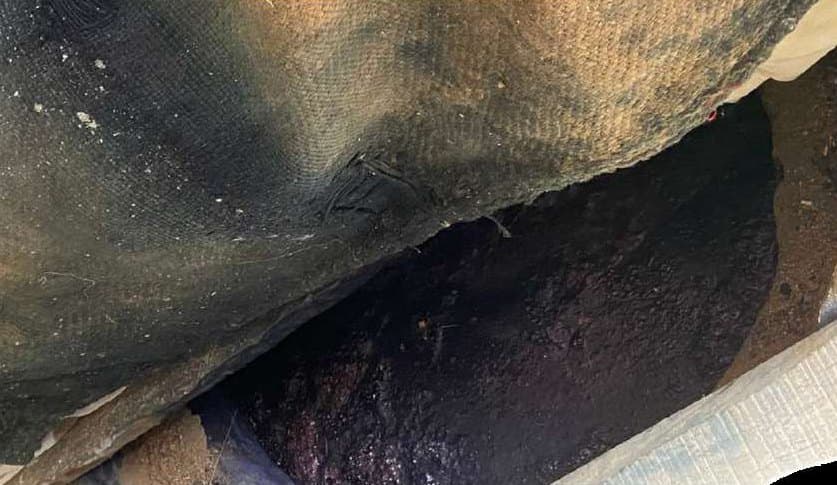
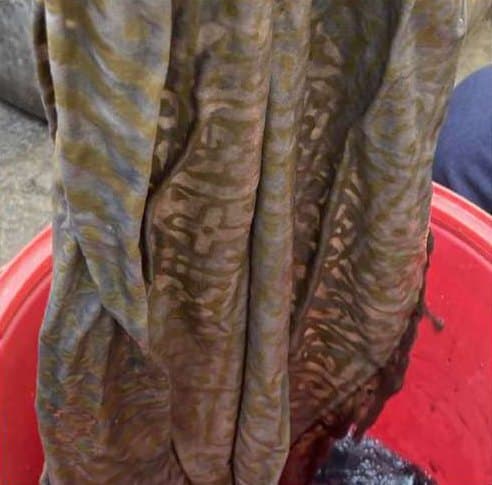
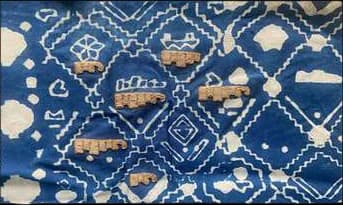
Dabu printing introduced an earth-based resist process using mud, lime, and natural binders to temporarily block dye absorption. I participated in preparing and applying the resist, controlling drying time, and removing the layers after dyeing. Cracking, peeling, and uneven resist coverage revealed how time, pressure, and environmental conditions shape the final outcome, requiring continuous adaptation during the process.
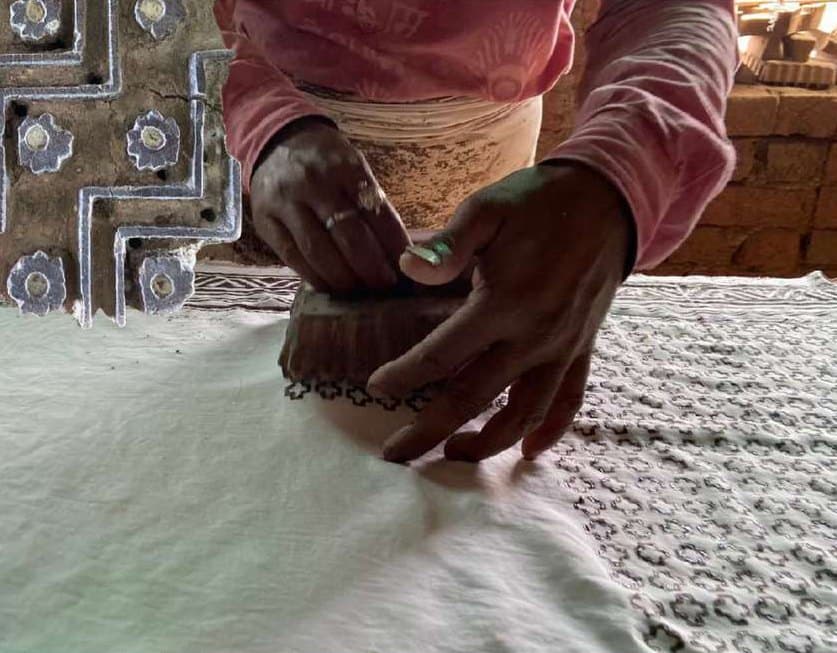
“Cracking and resist failure shaped final surfaces.”
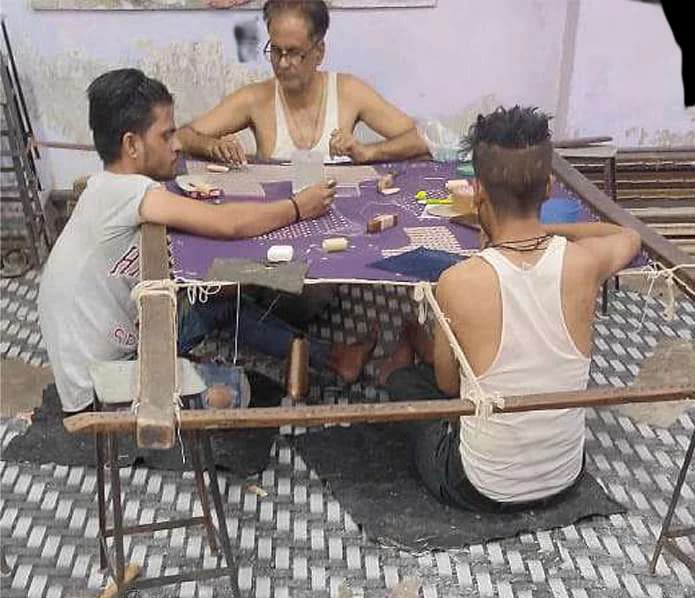
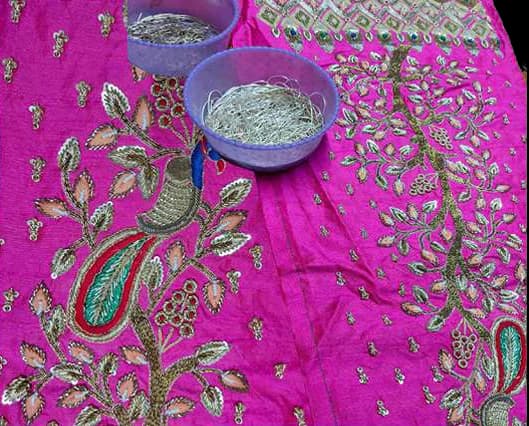
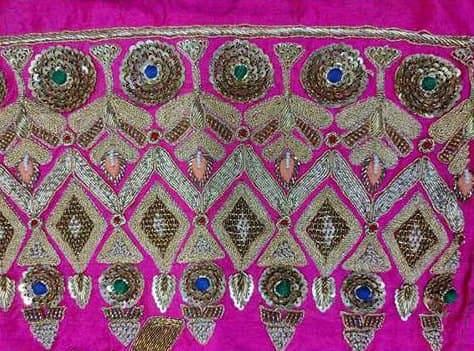
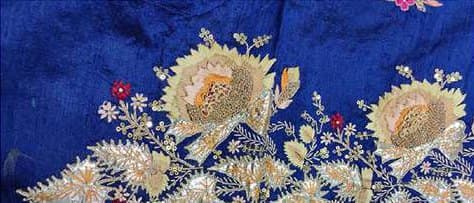
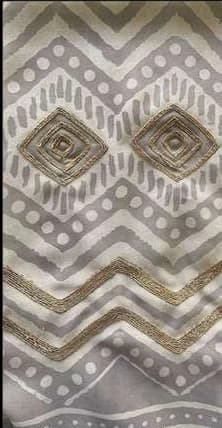
04.3 — Metallic thread embroidery
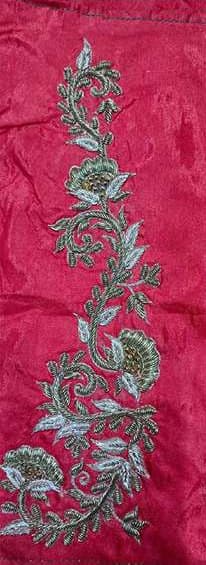
Dabka
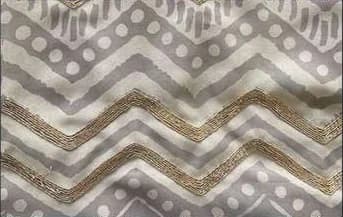
Dabka embroidery was explored as a labour-intensive surface intervention. I worked hands-on with metallic threads to understand how repeated hand movements, time investment, and stitching density altered the fabric’s weight, flexibility, and structure. This process highlighted how human energy and craftsmanship become physically embedded within the textile surface.
“Time and fatigue influenced stitch density.”
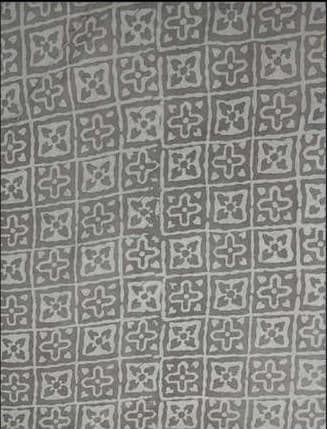
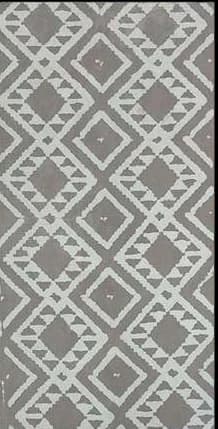
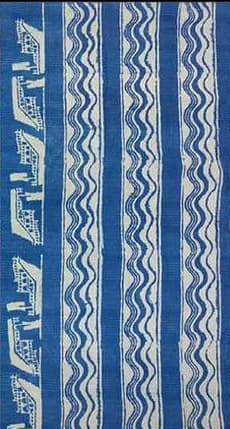
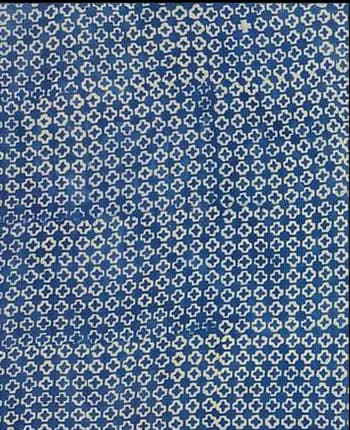
04.4 — Samples to surfaces
Scaling material behaviour
Scaling exposed stress points where materials resisted control, reinforcing garments as experimental tools rather than design endpoints.
Touch a swatch — the cloth moves
04.5 — Garments as testing grounds
Materials to application
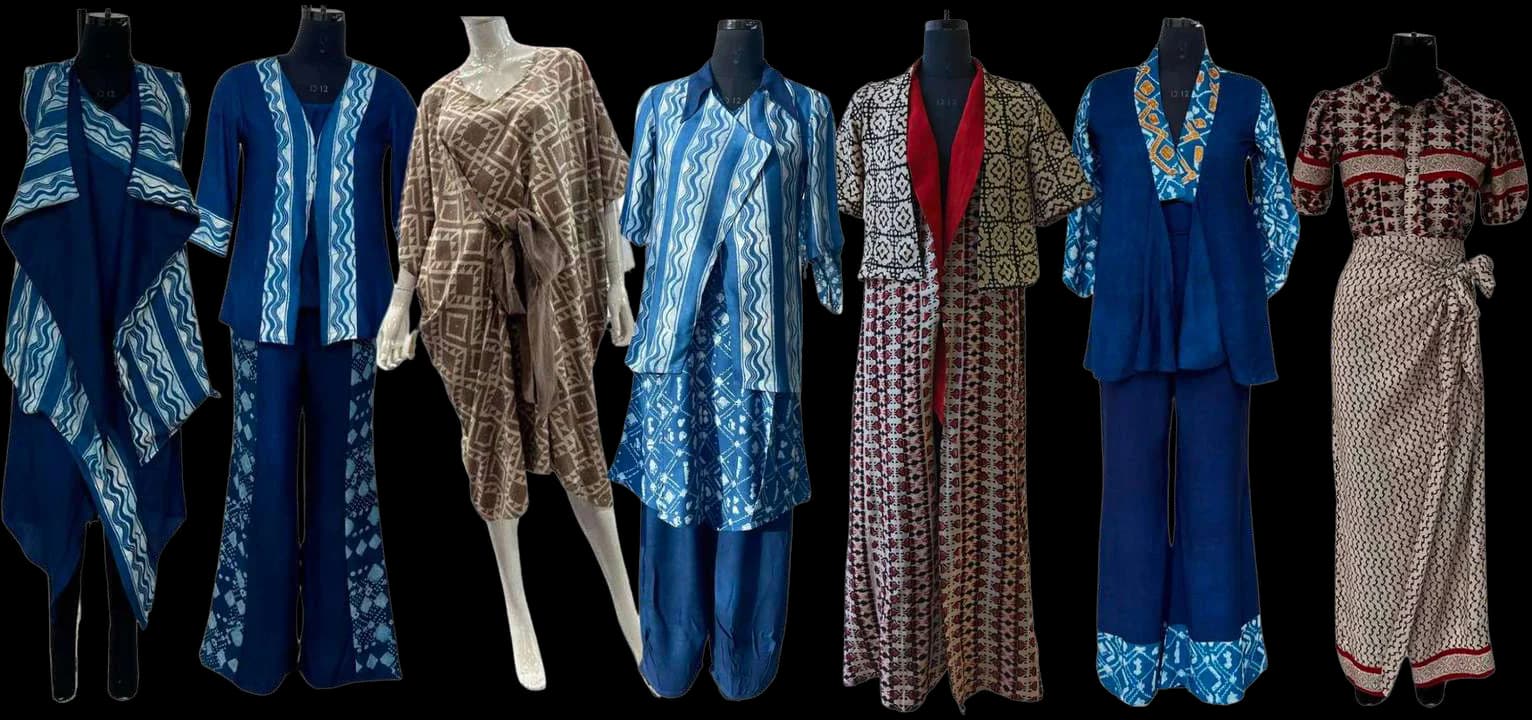
Garments were used as testing grounds to observe how developed textiles respond to stress, stitching, and movement at scale. This project shifted my approach from designing visual outcomes to designing through material systems shaped by time, environment, and human interaction. These experiences motivate my interest in Biodesign as a framework for engaging with regenerative materials and living systems.
05 — August – December 2024
Satyam
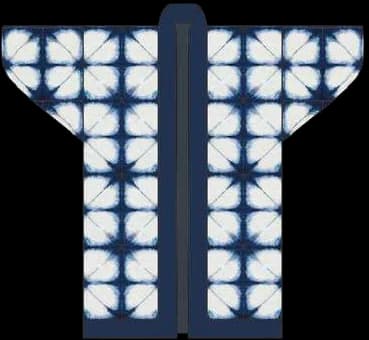
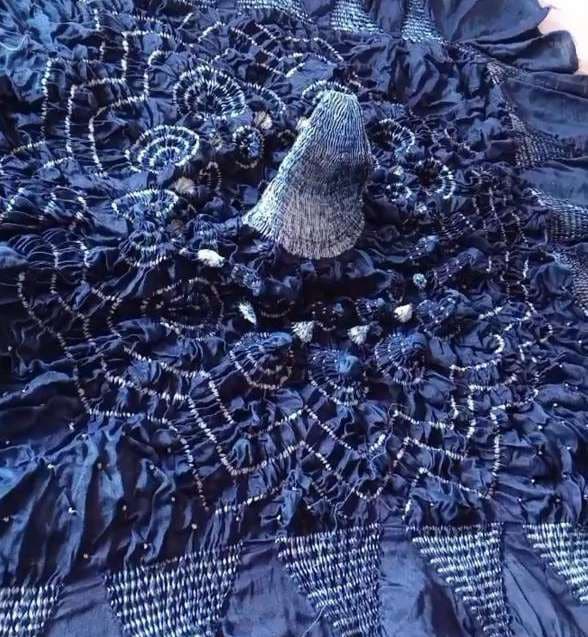
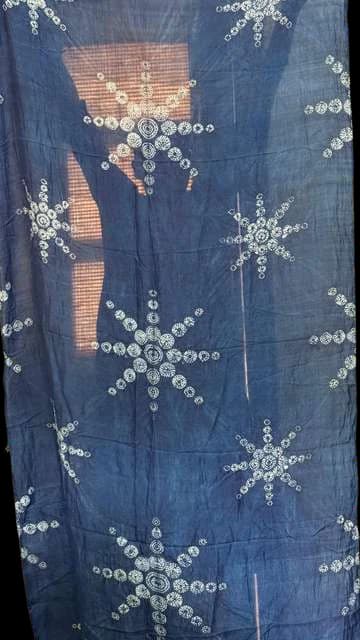
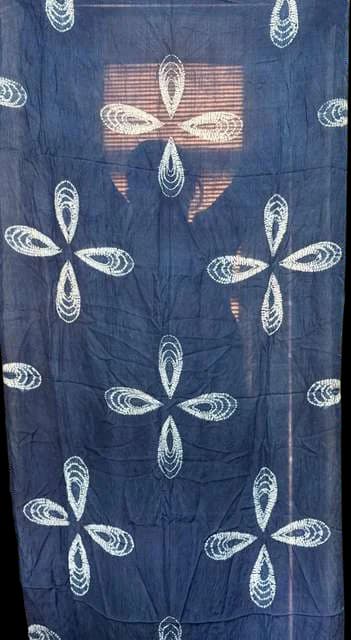
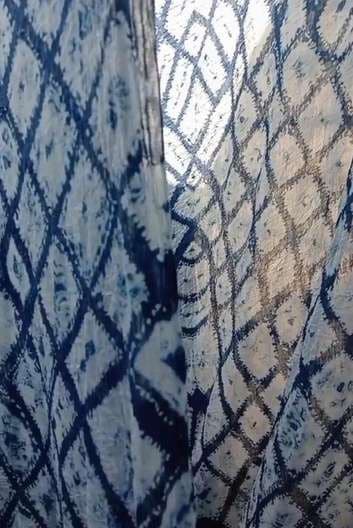
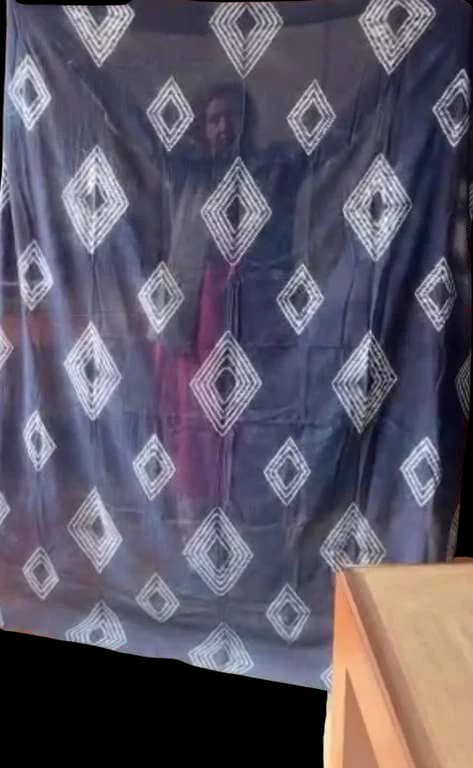
This project was conducted in collaboration with Satyam, a Rajasthan-based textile practice working with resist-dyeing and natural dye systems. Rather than focusing on brand identity, the project used this context to study Shibori as a material process shaped by tension, compression, dye penetration, and human intervention.
05.1
Print development
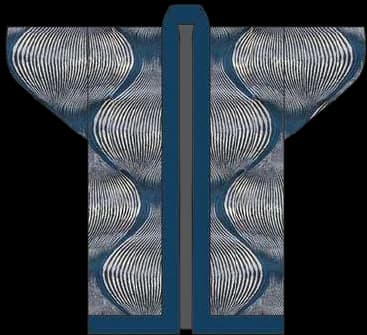
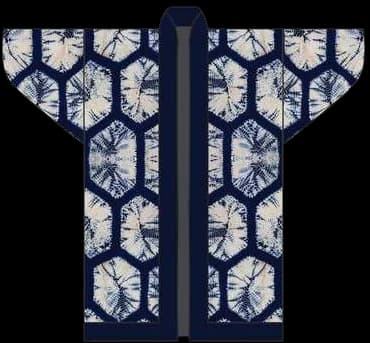
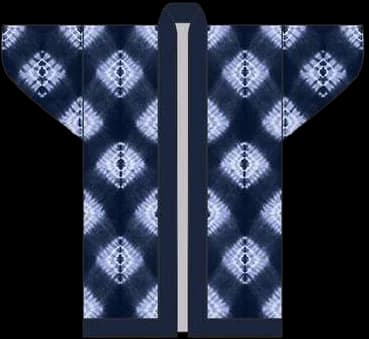
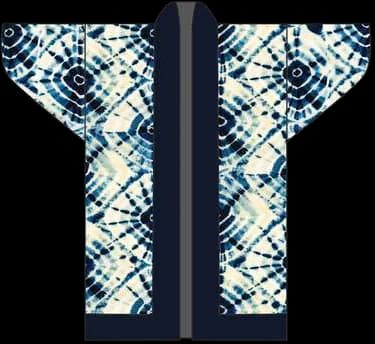
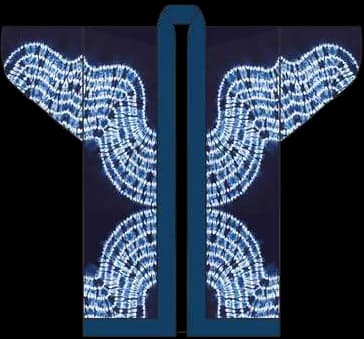
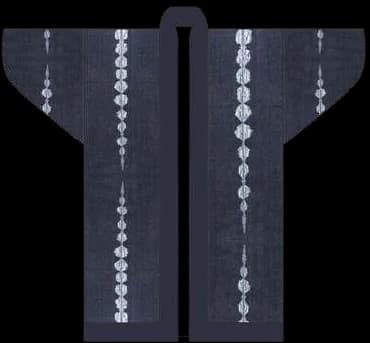
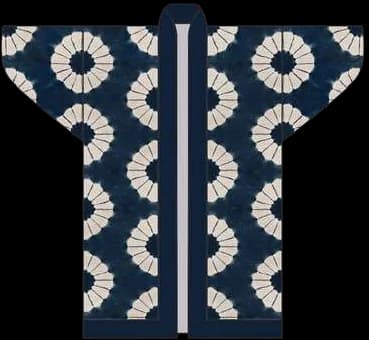
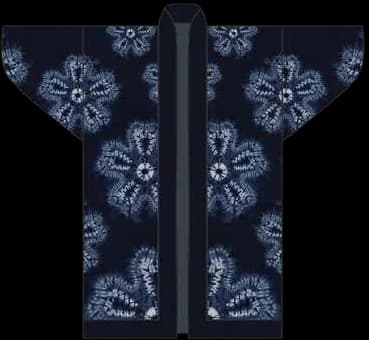
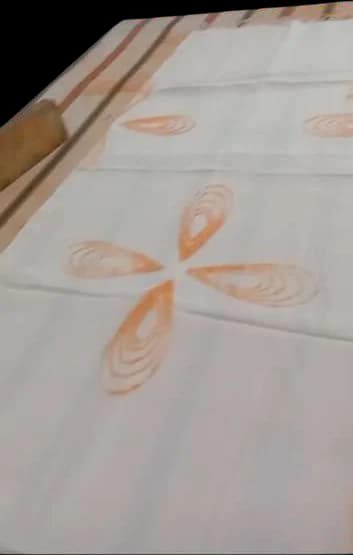
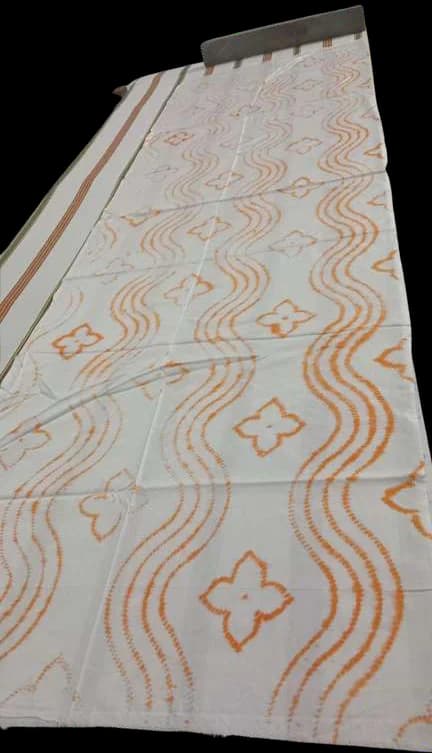
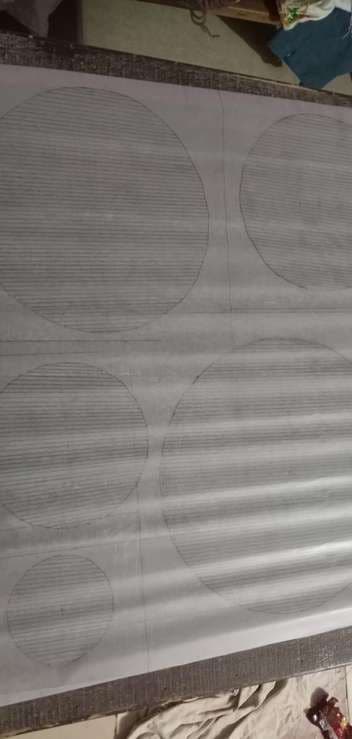
This stage explored Shibori through material testing alongside digital studies. Variations in folding, binding, stitching density, and fabric thickness examined how dye responds to physical manipulation.
Digital designs supported pattern and scale testing before material trials, revealing how tension, structure, and stitch placement shape dye diffusion and surface outcomes.
05.2 — Stitch resist
Process
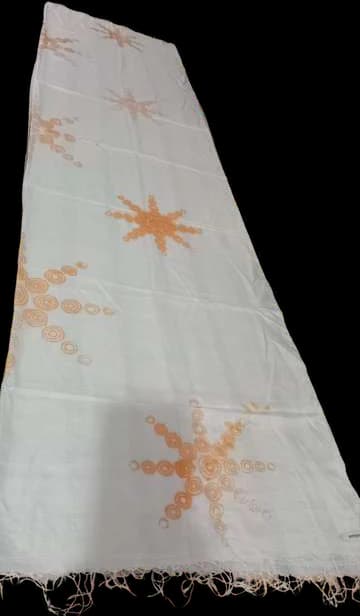
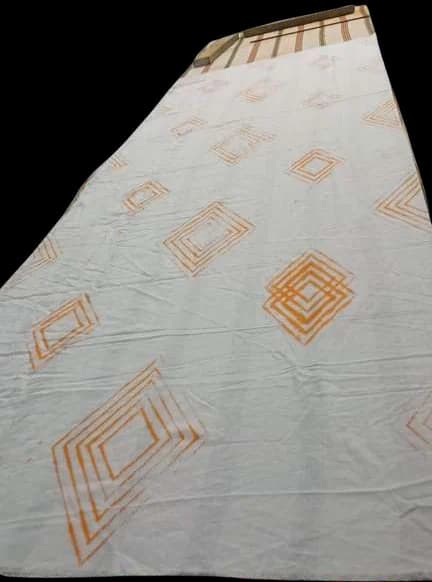
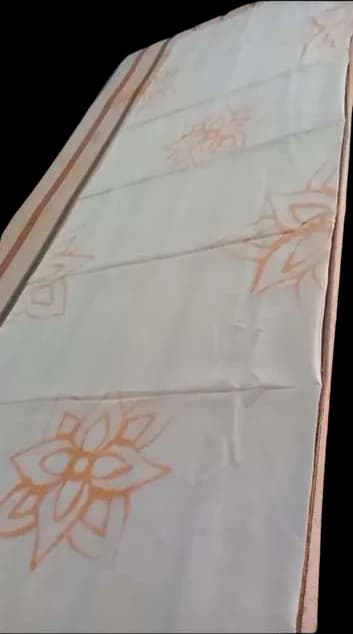
Shibori was explored through stitch-resist methods where embroidery acted as a temporary intervention to control dye exposure. I was involved in initiating, observing, and overseeing each stage, gaining insight into how stitch density, thread tension, and fabric compression influence resist behaviour. This exploration focused on surface, texture, and structure rather than garment inspiration, examining how folds, layering, and compression shape dye behaviour and material outcomes through human intervention.
05.3 — Shibori
Final garments
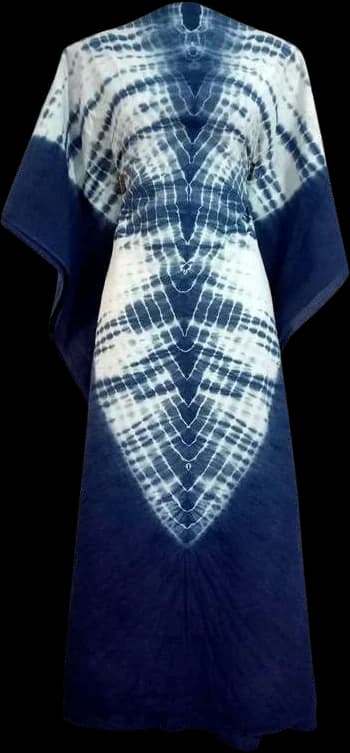
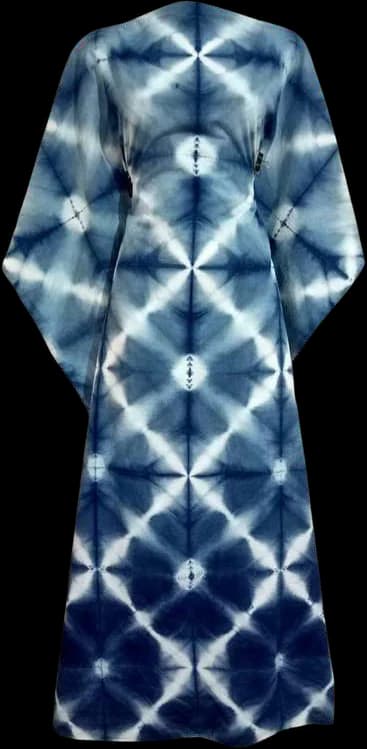
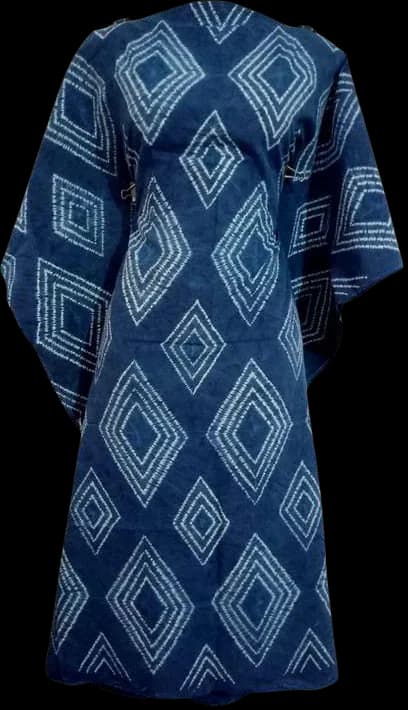
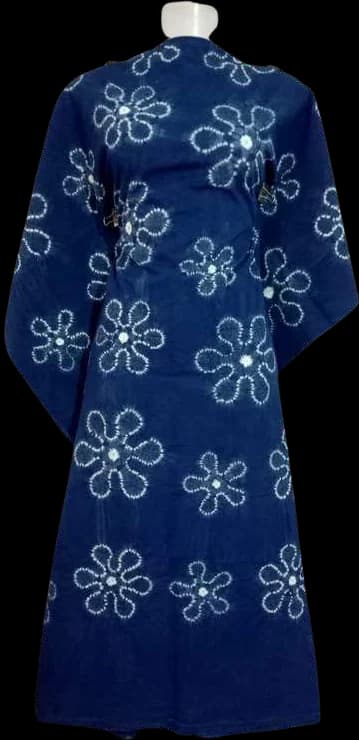
Garments were used as testing grounds to observe how Shibori-treated textiles respond to scale, stitching, and movement. Rather than final outcomes, they helped evaluate durability, flexibility, and structural behaviour. Uneven dye absorption, softened edges, and gradual tonal transitions emerged through variations in fabric compression, thread tension, and dye saturation. Tightly bound areas resisted colour, while looser sections absorbed dye more freely. Over time, the release of compression further altered the textile, reinforcing Shibori as a time-based system shaped by material resistance and human intervention.
06 — Graduation project, as material process
Scribble to Rebel
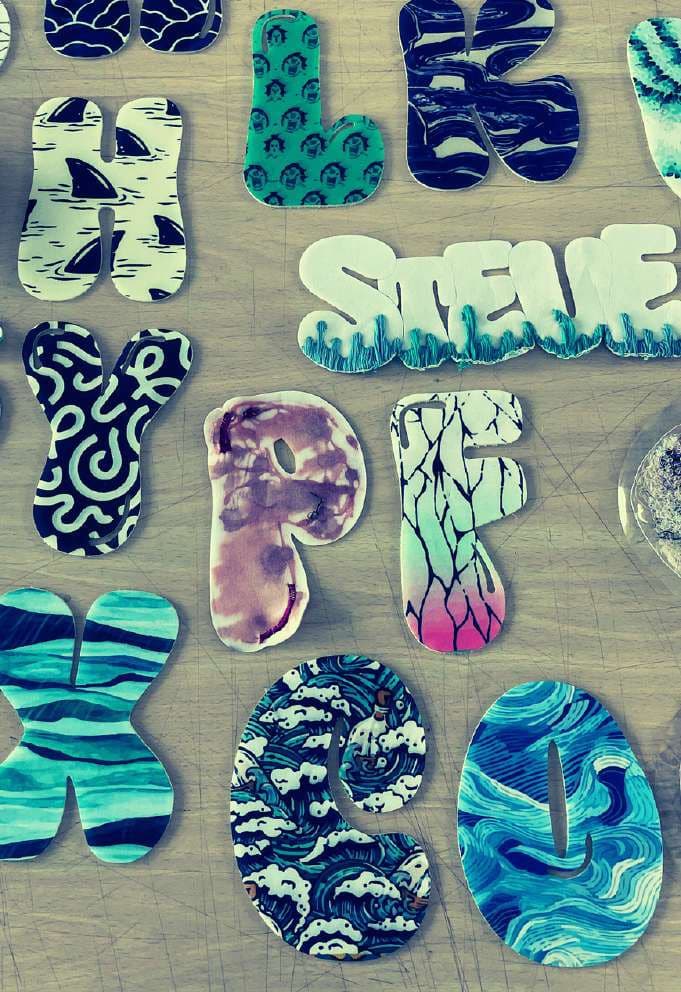
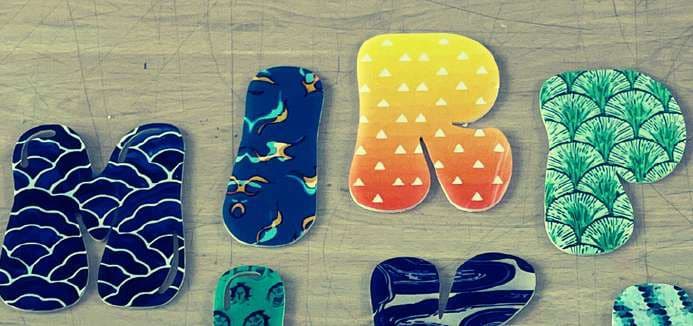
The project began as an exploration of graffiti as a visual language, but gradually shifted into studying how surfaces, marks, and layers are created through textile processes. Rather than focusing on designing garments, the emphasis moved toward understanding how materials change through printing, resist, quilting, puffing, and embroidery. Repetition, pressure, and hand involvement played a key role in shaping the fabric, allowing patterns and textures to develop over time.
Unpredictability note — each process responded differently to handling, making outcomes non-repeatable and material-led.
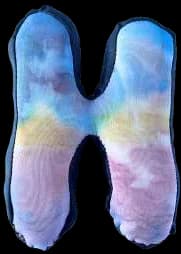

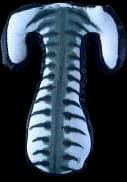
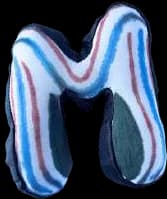
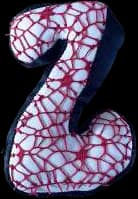
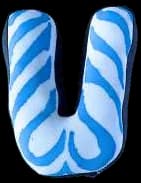
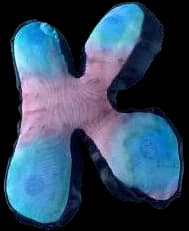
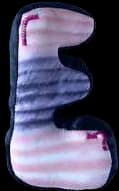
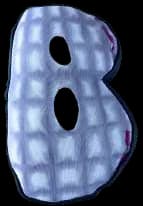
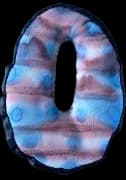
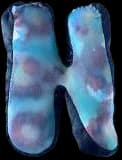
Puffed and quilted letters · pick one up and throw it
01
Printing & tie-dye
Printing, tie-dye, and embroidery were explored as surface experiments rather than decorative techniques. By changing folds, bindings, and dye saturation, I observed how colour spreads each time differently. The process showed how fabric reacts to physical handling and how outcomes cannot be fully controlled.
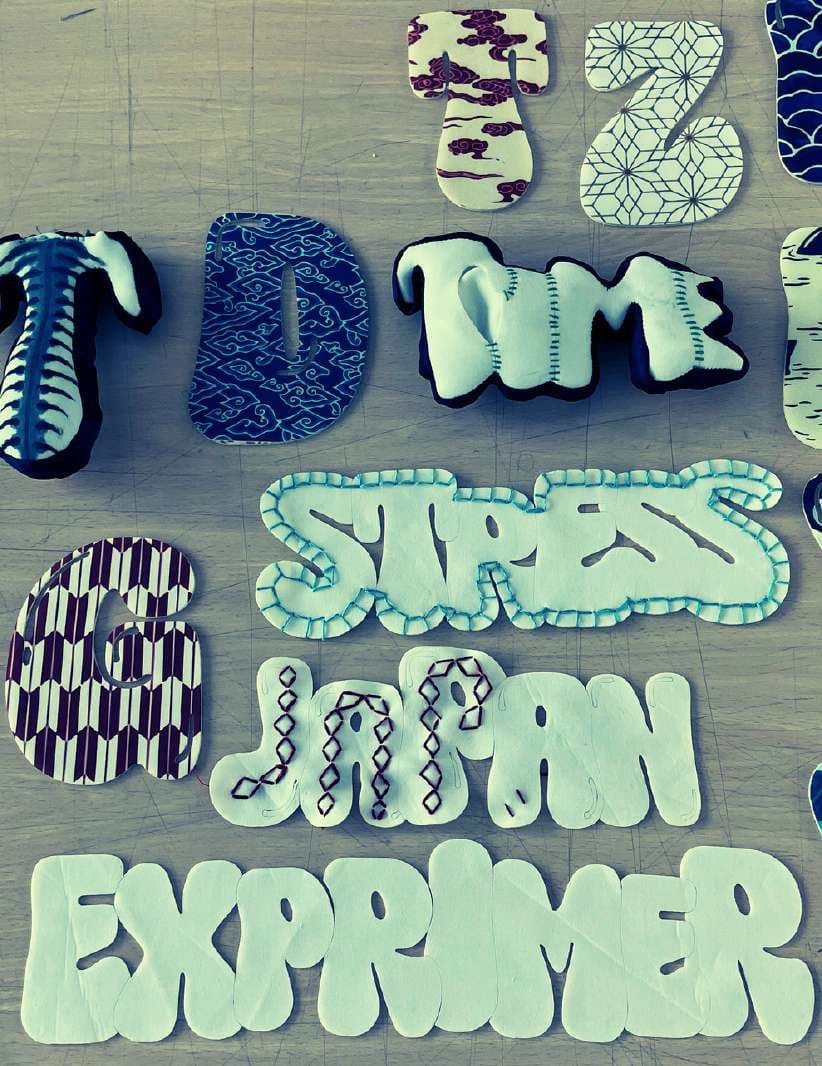
02
Puffing & quilting
Puffing and quilting were used to change the structure of the fabric. Adding layers and volume transformed flat textiles into raised, tactile surfaces. This helped me understand how stitch density, padding, and pressure affect weight, flexibility, and surface behaviour.
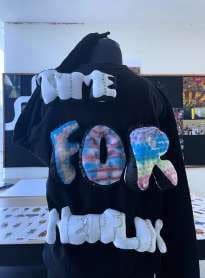

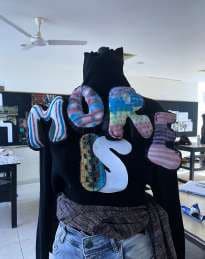
Letter positioning
Letterforms were explored as modular elements rather than graphic symbols. Their placement, repetition, and overlap were used to study surface organisation, spatial tension, and rhythm.
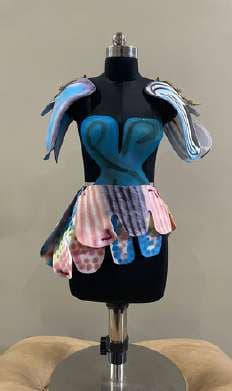
Toile
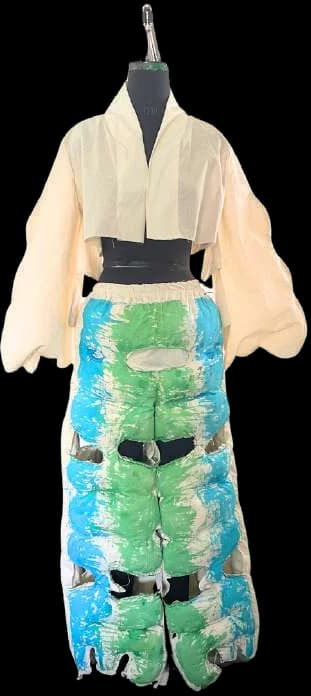
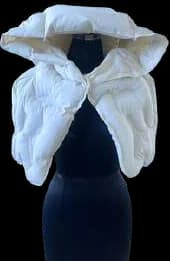
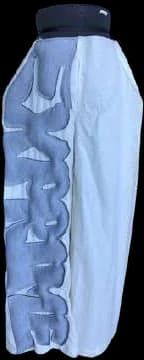
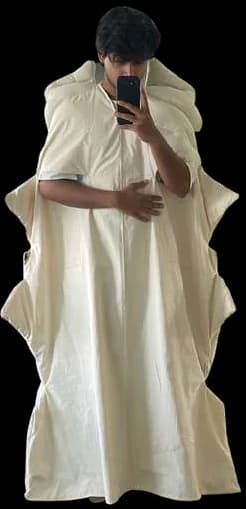
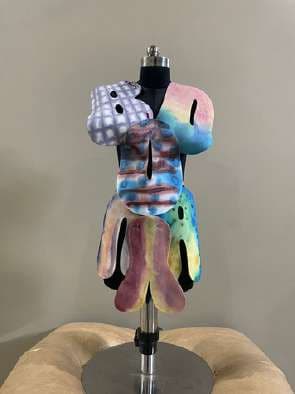
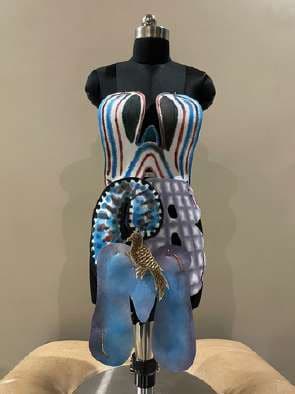
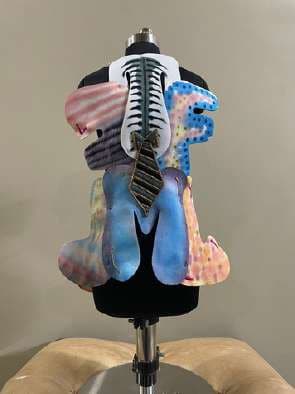
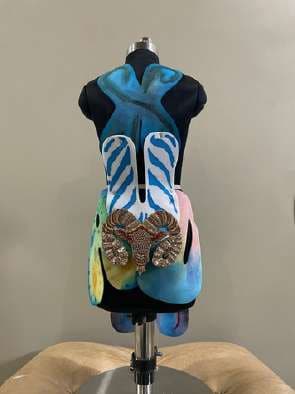
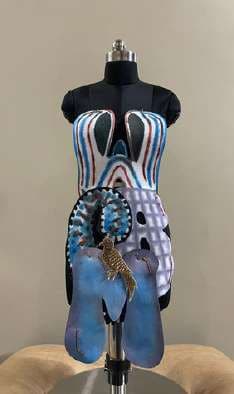
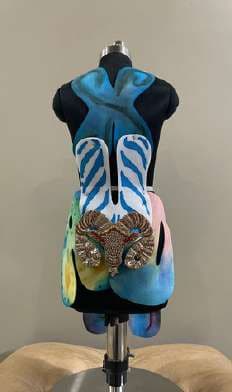
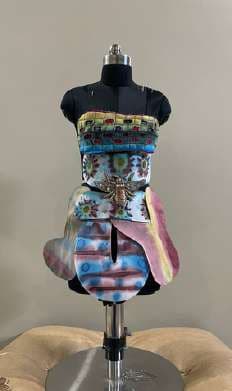
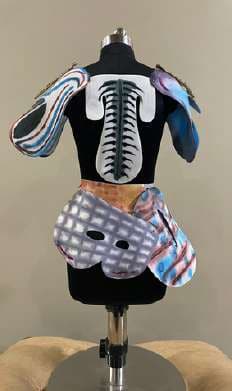
Toiles were used as material tests to see how the textured and layered fabrics behave on the body. This helped me observe movement, weight distribution, and how surfaces respond when shaped and worn.
Final visuals
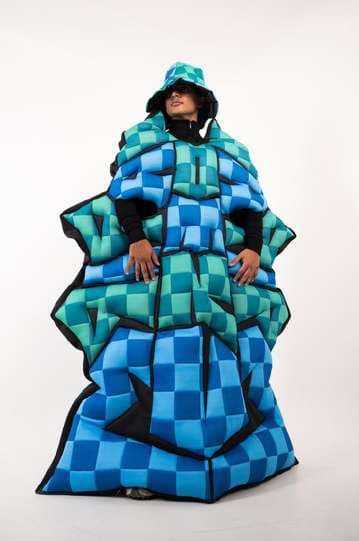
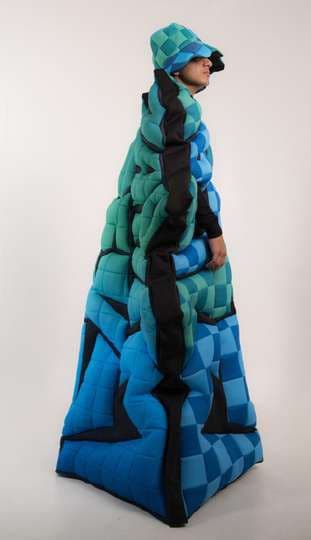
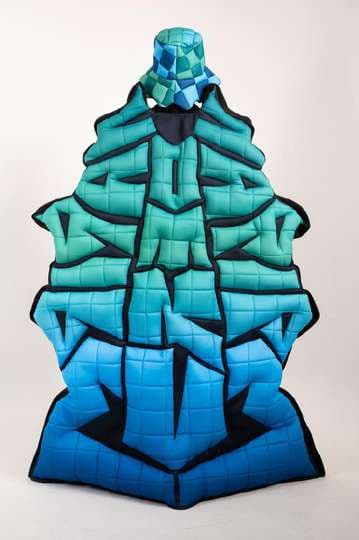
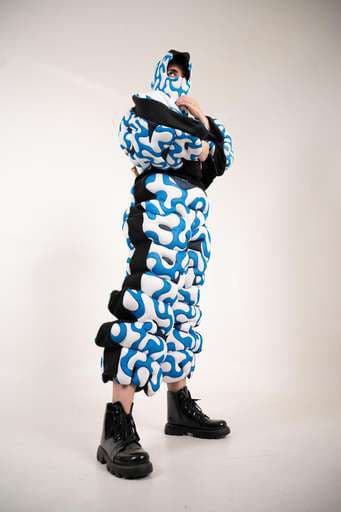
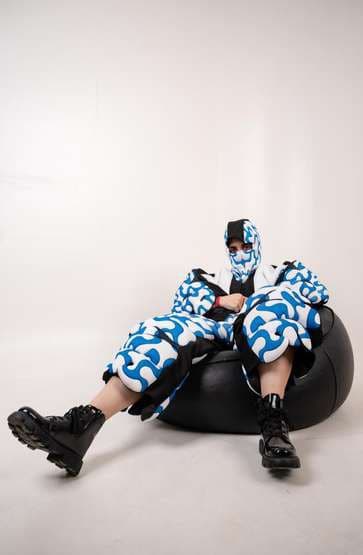
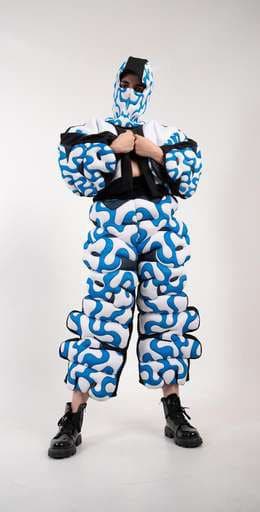
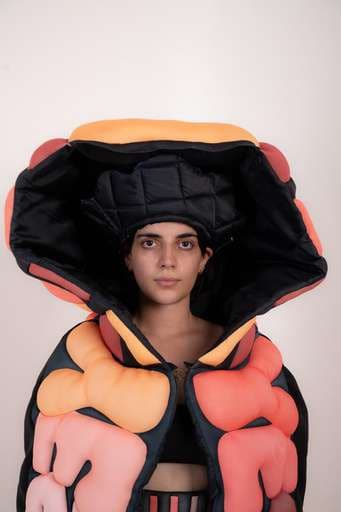
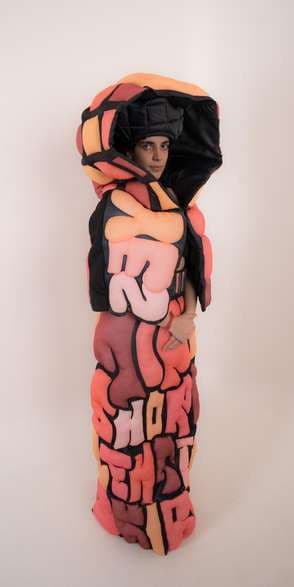
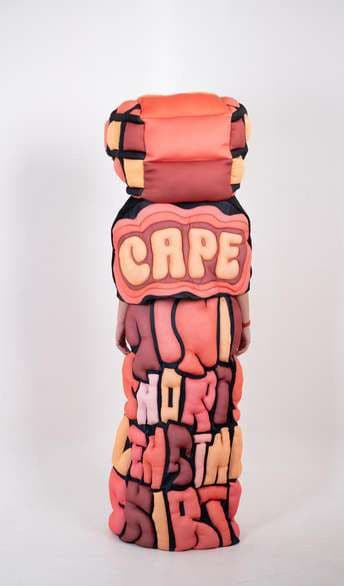
The final garment was used as a testing ground rather than a finished fashion piece. It allowed me to observe how printed, quilted, and puffed surfaces respond to stitching, scale, and movement. The focus remained on material behaviour instead of visual perfection.
Reflection
This project shifted my way of working from designing for appearance to designing through material processes. Exploring graffiti through textile techniques helped me understand how repetition, pressure, and human intervention shape surfaces over time. This approach strengthened my interest in material systems and Biodesign-led thinking.
The full Scribble to Rebel project07 — Where it began
Traditional techniques are treated as living processes shaped by time, environment, and human intervention rather than fixed outcomes.